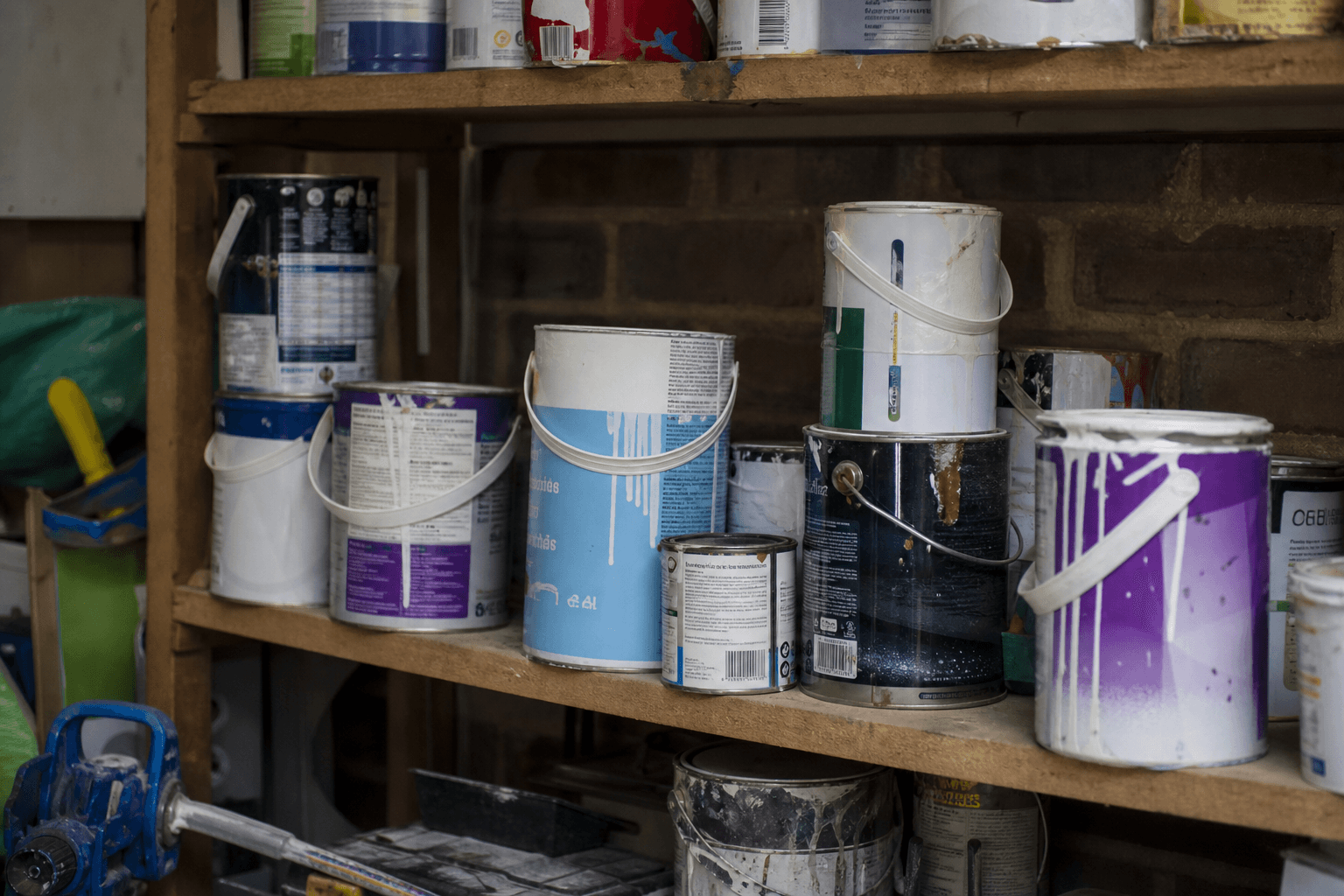
How to Dispose of Paint in the UK: The Rules, the Cat-Litter Trick and What to Do With a Garage Full of Tins
Liquid paint can't go in the bin. Here's the UK rule, the cat-litter hardening trick, where to donate in London — and when to call in a collection.
Knowing how to dispose of paint in the UK starts with one rule: liquid paint is banned from landfill, so you can't put it in the bin or take it to the tip while it's still wet. That's the rule that explains everything else — and what you do next depends on the type:
- Emulsion (water-based): harden it, then bin the solid — in most boroughs, but check your council.
- Gloss, satinwood, varnish, stains (solvent-based): hazardous — take it to an HWRC that accepts it, or use a licensed carrier.
- Usable, part-full tins: donate to Community RePaint (more than a third full, original tin, under 10 years old).
The rest of this guide covers the DIY route, tin by tin. Clearing more than a few? We collect paint within any clearance across SW London, same day — licensed man and van collection if the hardening route isn't worth your weekend.
Why you can't just bin liquid paint
The reason binmen leave your paint on the doorstep, and the tip turns you away with a wet tin, comes down to one regulation. Under the Landfill (England and Wales) Regulations 2002 — now folded into the environmental permitting regime — landfill operators may not accept any waste in liquid form. Paint counts, so a wet tin has nowhere legal to go, which is why it can't sit in your bin — harden it first and the problem disappears. Solvent-based gloss, varnish and wood stains carry a second layer: they're household hazardous waste, so even hardened they shouldn't go in general refuse — more on that split below.
Getting this right isn't just a "the crew won't take it" inconvenience. As a householder you have a legal duty of care over your own rubbish under the Environmental Protection Act 1990: hand your waste to someone who isn't a licensed carrier, or let it get fly-tipped, and you can be hit with a fixed penalty — typically £200, and your council can set it anywhere up to £600.
Need help with Residential Waste Collection?
Tell us about your job and we will match you with the right professional for Residential Waste Collection.
First question: emulsion or gloss?
Work out which kind you've got first — it decides the whole route, and the tin tells you. Water-based paints (standard emulsion, most modern wall and ceiling paints, many "quick-dry" trims) clean up with water. Solvent-based paints (traditional gloss, satinwood, eggshell in oil, varnishes, wood stains and preservatives) tell you to clean brushes with white spirit or turps. That one distinction sorts your disposal:
Water-based (emulsion): clean-up with water; not hazardous waste; can harden and bin in most boroughs (check your council); dried solid goes in general waste; never pour down the drain.
Solvent-based (gloss, varnish, stains): clean-up with white spirit or turps; hazardous waste; do not harden and bin — take to an HWRC hazardous point or use a licensed carrier; never pour down the drain.
B&Q and Screwfix confirm the split: emulsion, once fully solid, "may be accepted in general waste depending on rules set by your local authority," while oil-based paints are hazardous waste. Acceptance varies borough to borough, so confirm on your council's page. If the label's long gone and you can't tell, treat it as solvent-based — that's the safe default.
How to dispose of old paint (the cat-litter trick)
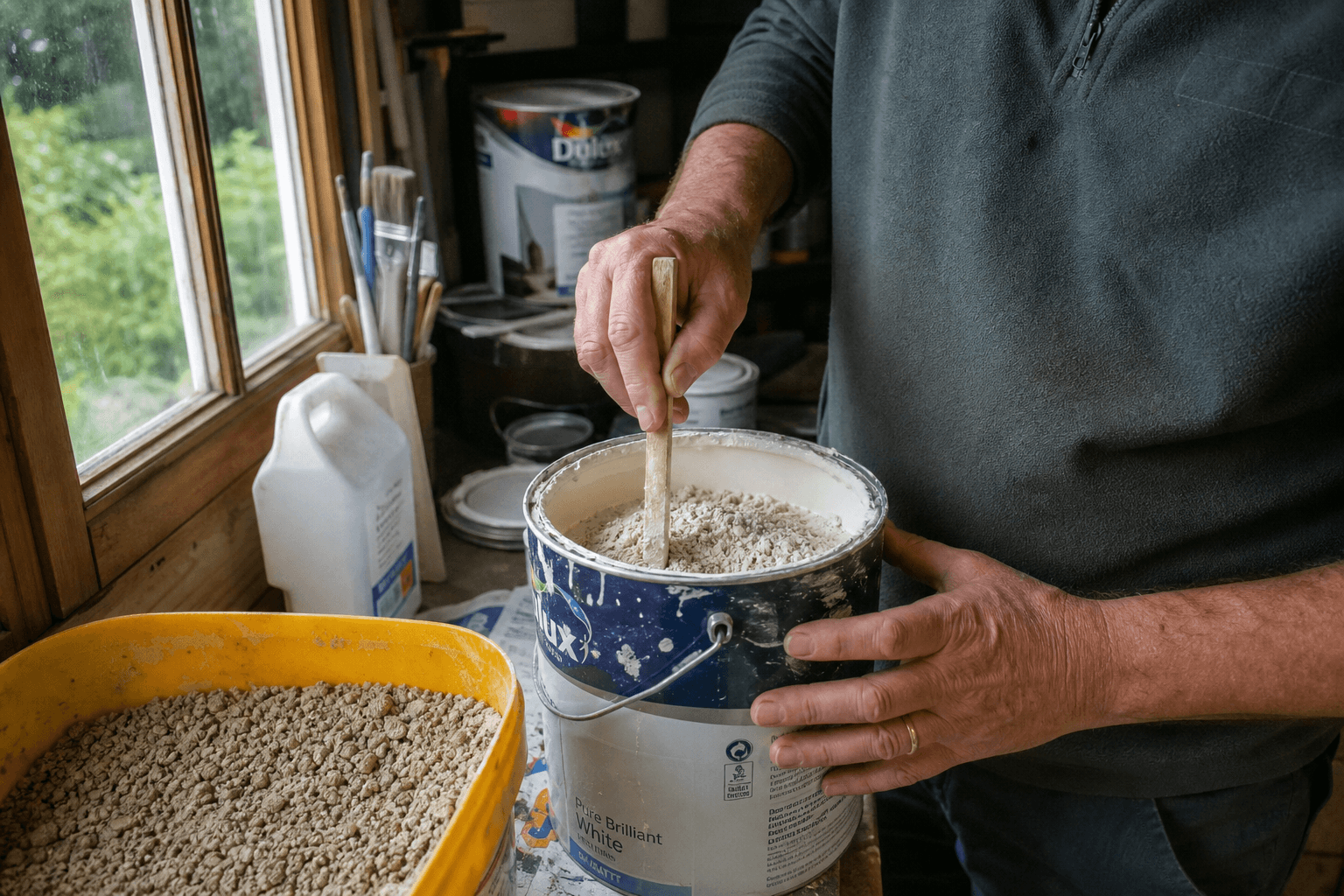
For a part-used tin of emulsion, the simplest way to dispose of paint is the trick everyone half-remembers, and it's the right one: turn the liquid into a solid so it stops being banned-from-landfill waste, then bin the block. Here's how to dispose of paint this way, step by step.
- Take the lid off and stand the tin somewhere ventilated. A nearly empty tin with a thin skim may air-dry on its own over a few days — no litter needed.
- Stir in an absorbent. Cat litter is the classic, but builder's sand, sawdust or shredded paper all work. Add it gradually until you've got a thick, stiff paste rather than a pourable liquid — roughly matching the volume of paint is a sensible start.
- Leave it to set — a few hours to a couple of days, depending on how full the tin is.
- Check it's solid all the way down. Poke it. If there's liquid under a crust, stir in more absorbent and wait until the block won't slump or run.
- Bin it with the lid off so the crew can see at a glance that it's dry.
Prefer to skip the mixing? A commercial paint hardener does the same job faster — a small sachet is a few pounds (bigger tubs cost more) and you stir it in per the instructions. One honest limit: this is a two-or-three-tin job. Staring at a shelf of a dozen? Skip to the clearance maths below.
Explore our Office and House Clearance service
See what is included, typical timings, and what to prepare before you book.
Donate it instead: Community RePaint
Before you harden anything, ask whether the paint is still good — because the best route is not to dispose of it at all. The scale of the waste is stark: the British Coatings Federation estimates the UK generates about 55 million litres of leftover decorative paint a year, yet only around 2% gets reused, with roughly 98% incinerated or sent to landfill. A tin you donate is a tin that doesn't become part of that.
Community RePaint is a UK-wide network of local reuse schemes that passes usable leftover paint to community groups, charities and people on low incomes. The network's own rule: paint should be more than a third full, in its original tin, and less than 10 years old. They take everyday household types — emulsion, gloss, masonry, eggshell, undercoat, primer, varnish and wood stains. (Gloss is welcome for donation even though it's hazardous for disposal, as long as it's usable.) They won't take aerosols, spray paint, stripper, thinners, brush cleaner, wood preservatives, car and cellulose paints, or anything industrial or unusable. To find your nearest drop-off, use the postcode finder on the Community RePaint website.
Donation is free, dodges the hardening-and-binning routine for good emulsion, and keeps decent paint out of the incinerator. Industry is catching up: PaintCare, the coatings industry's take-back initiative, targets reusing or recycling 75% of leftover paint by 2032. For now, the network schemes are the practical route.
How to dispose of paint cans and tins
The cans and tins are a separate question from the paint inside them. Once a tin is genuinely empty, the container is recyclable — but only when it's bone dry. Empty metal paint tins, scraped out and fully dried, can go to a recycling centre's scrap-metal skip, and in many areas kerbside too. The catch is "many areas": rules vary, so check your borough takes metal paint tins before you leave them out. Plastic tubs are trickier — largely not yet recycled through mainstream collections (B&Q notes only pilot schemes), so expect a no in most boroughs.
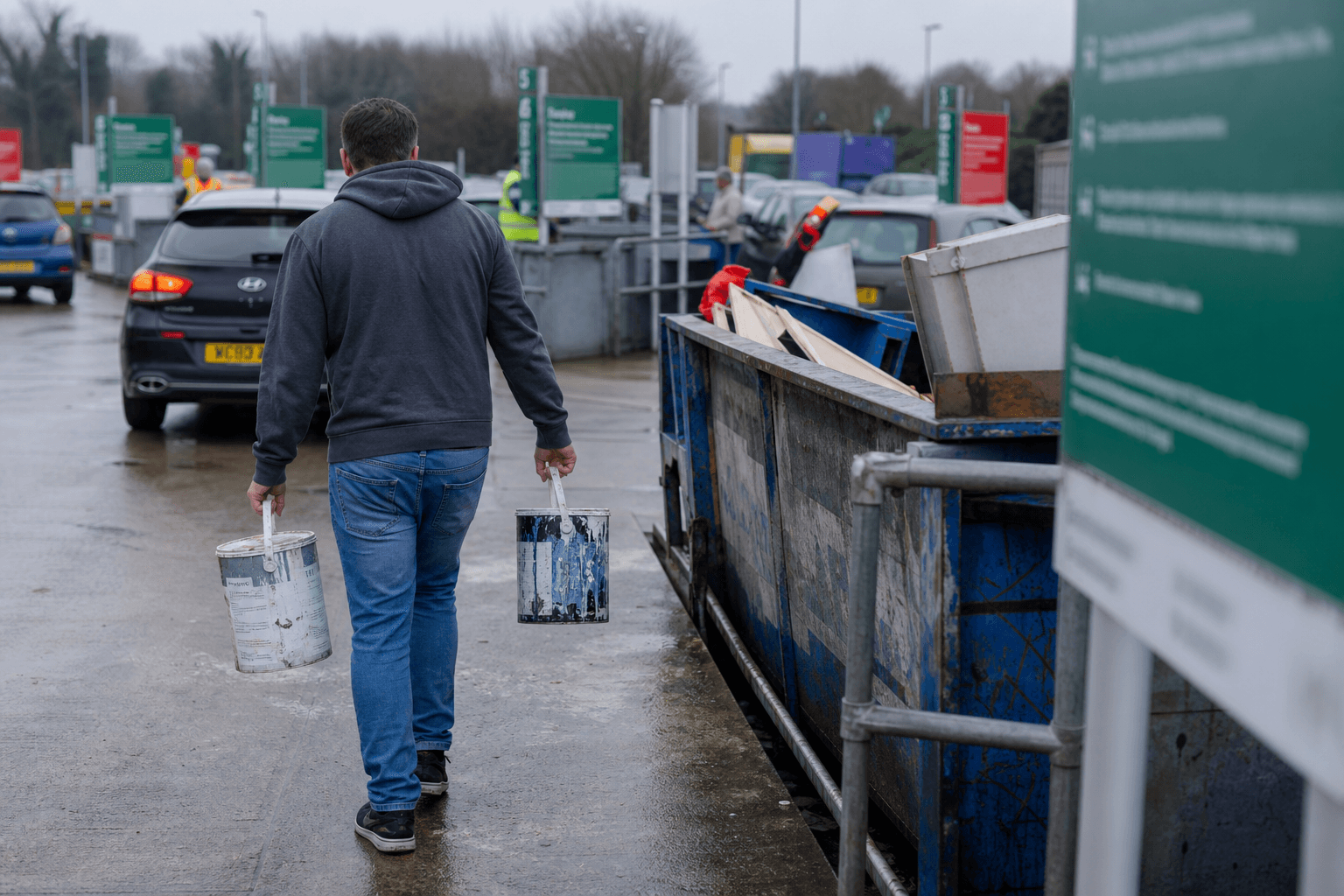
You're not alone in leaving it too long: the Royal Society of Chemistry found 73% of UK adults stash unused paint at home — around 50 million tins — yet only 27% have ever recycled any. In SW London, Smugglers Way HWRC in Wandsworth accepts paint, but it's residents only with proof of address, cars must pre-book, and there's a 2m height limit — no vans (2026 rules; confirm on the council's page). Our London tip run guide weighs up the DIY trip against a collection.
Ready to book Residential Waste Collection?
Send a quick enquiry — we typically respond the same working day.
Solvent-based paint, varnish and stains: the hazardous route
Solvent-based paint changes the rules. Gloss, satinwood, varnish, wood stains and preservatives don't get the harden-and-bin treatment — they're household hazardous waste, which means a Household Waste and Recycling Centre with a designated hazardous-waste point or a licensed collection. Not every HWRC takes hazardous paint, so ring ahead or check the site's A–Z before you load the car.
Two hard rules apply. First, never pour paint down the drain, the sink or onto soil — Screwfix and B&Q are both blunt about it: paint pollutes waterways, and any discharge to a sewer needs clearing with your water company first. Second, handing it to someone else falls under the duty of care in section 34 of the Environmental Protection Act 1990: it has to go to a carrier registered with the Environment Agency, with a waste transfer note as your paper trail. That's why a skip usually isn't the answer — solvent paint is exactly the hazardous waste most operators exclude: skips won't take paint either — here's what a clearance costs instead.
Got a whole garage of tins? When a clearance service makes sense
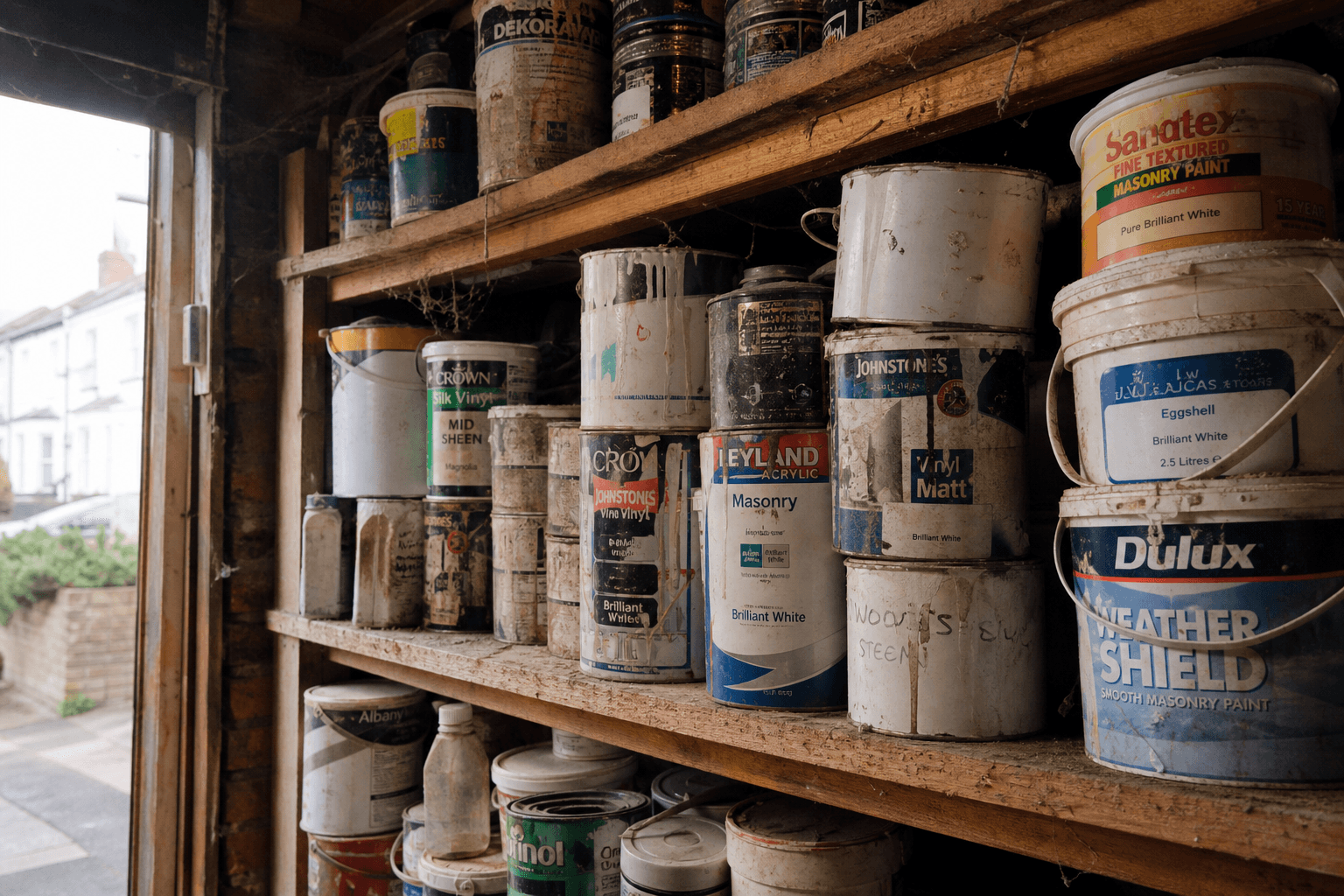
Sometimes it isn't a couple of tins — it's a garage shelf filling since 2011, or a house clearance with thirty tins left behind. Hardening 20 or 30 tins means buying litter by the sack, batching them through a shed for days, then running the blocks and the solvent tins to the tip in separate loads.
The tip isn't the cheap fallback people assume, either. Free DIY waste at Wandsworth's WRWA sites is capped at 100 litres or one large item, once every 7 days and pre-booked; go over and it's £286.70 per tonne with a £154.82 minimum per load (2026 figures — confirm on the WRWA DIY page). A garage of paint blows past that allowance fast.
For a full garage, one licensed collection is the cleanest route. A man-and-van crew clears the lot in one visit — we do garages off Lavender Hill and around Tooting Broadway most weeks, usually within a booked two-hour slot — and hand you a waste transfer note as proof, the paper trail a skip can't give you. Our guide to house clearance costs in London breaks down the numbers.
20 tins = a weekend of cat litter, or one WhatsApp photo. Licensed crew, duty-of-care receipt, gone today across SW London. Call us or WhatsApp a photo for a fixed price.
While you're sorting the garage, our related guide on how to dispose of cooking oil covers the other liquid the tip is fussy about.
Frequently asked questions: How to Dispose of Paint in the UK: The Rules, the Cat-Litter Trick and What to Do With a Garage Full of Tins
Short answers to common questions about this topic.
Our team will answer all your questions. we ensure a quick response.
Contact UsRelated posts
Most London tips ban hire vans — and DIY tip runs cost more than you think. Real 2026 numbers vs a man-and-van tip run. Same-day option for SW London.
London skip hire runs ~£200–£450+ in 2026 — before the council permit. See the honest skip vs man-and-van comparison, then get a same-day quote.

What house clearance really costs in London — itemised 2026 prices by property size, what bumps the bill, and free routes. Get a fixed quote today.
Latest in Waste Tips
View all in this category
Same-day Wandsworth rubbish removal. Two-man team clears the Tonsleys, Southside and Riverside Quarter. Licensed carrier. Call or WhatsApp now.

Two-man team carries your old sofa out today — no kerbside dragging, no council wait. Per-item London prices from £45. WhatsApp us for a quote.
London skip hire runs ~£200–£450+ in 2026 — before the council permit. See the honest skip vs man-and-van comparison, then get a same-day quote.
Latest in Recycling
View all in this categoryMost London tips ban hire vans — and DIY tip runs cost more than you think. Real 2026 numbers vs a man-and-van tip run. Same-day option for SW London.
Never down the sink. How to dispose of cooking oil in the UK — small amounts, fryer oil & where London takes it. Big volumes? Same-day collection.
Many recyclable items still end up in general waste every day. Here are ten common items and how to handle them correctly.
Related services
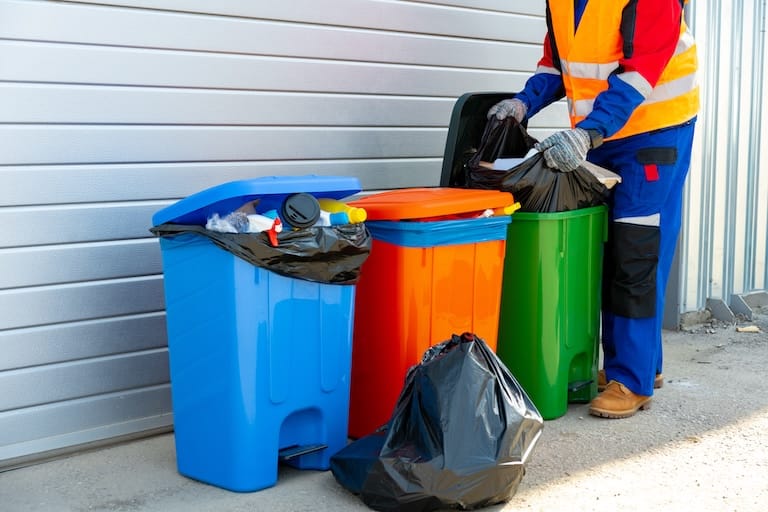
Fast, licensed household rubbish removal for houses and flats in Clapham and nearby areas. Clear prices. Responsible recycling. Local team.
Complete clearance services for homes, offices, and commercial properties during moves, refurbishments, or end-of-tenancy cleanouts.
Ready to Book Your Service?
Tell us what you need and our team will help you arrange collection quickly, with clear pricing and no hidden fees.