How to Dispose of Cooking Oil in the UK: The Right Way for Every Amount (and Where London Takes It)
Never down the sink. How to dispose of cooking oil in the UK — small amounts, fryer oil and where London takes it. Big volumes? Same-day collection.
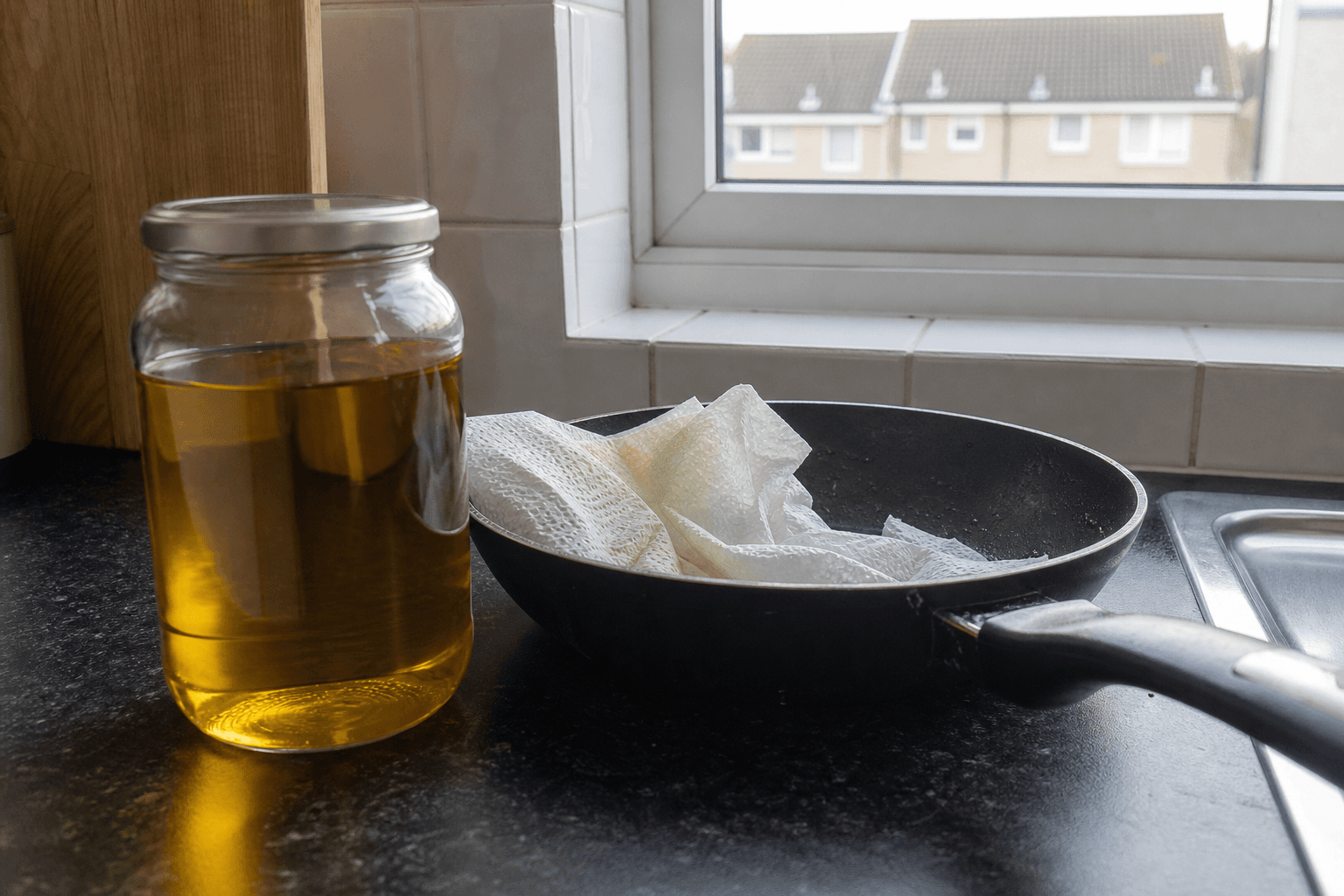
Knowing how to dispose of cooking oil comes down to one rule: contain it before it goes anywhere. Let it cool, pour it into a sealable container, then put that container in your general waste bin. Never tip loose oil down the sink, the drain or the toilet. Got more than a container's worth, like a deep-fryer's load, take it to a recycling centre that accepts cooking oil.
Here's the 30-second version:
Cool it. Wait until the oil is at room temperature. Hot oil melts plastic and burns.
Contain it. Pour it into a sealed jar or bottle. Wipe pan dregs with kitchen roll and bin that too.
Bin it or take it. Small amounts go in your general bin (sealed). Large volumes go to a recycling centre.
Got more than a jar's worth — a fryer, a garage full of old cans, a closed café? We offer same-day rubbish removal in South West London. Call 07900 455898 or WhatsApp a photo for a fixed price.
The 30-second answer for a pan of oil
The mistake most people make is treating oil like water. Water flows away; oil clings, cools, and hardens onto the inside of your pipes like candle wax.
Let it cool completely, then pour it into something you can seal — an empty milk bottle, a jam jar, the plastic bottle the oil came in. Wipe the greasy film left in the pan with kitchen roll and bin that too. A little washing-up liquid and hot water handles the trace that's left.
Once it's sealed, a small container of household cooking oil can go in your general waste bin. Recycle Now and Thames Water both back this method: cool it, contain it, bin it. The container is doing the real work — it stops the oil being loose liquid, which is what causes the damage downstream and what landfill rules don't allow in the first place.
One thing worth clearing up, because a lot of advice online gets it backwards: if your council collects food waste, small amounts of cooking oil, fat and fatty plate-scrapings can go in your food caddy, according to Recycle Now. Small amounts only, though. A caddy is not the place to empty a chip pan or a fryer — larger, liquid volumes belong at a recycling centre, never in food waste and never down the sink. No caddy? Seal the cooled oil in its container and bin it.
Need help with Residential Waste Collection?
Tell us about your job and we will match you with the right professional for Residential Waste Collection.
Why you must never pour cooking oil down the drain
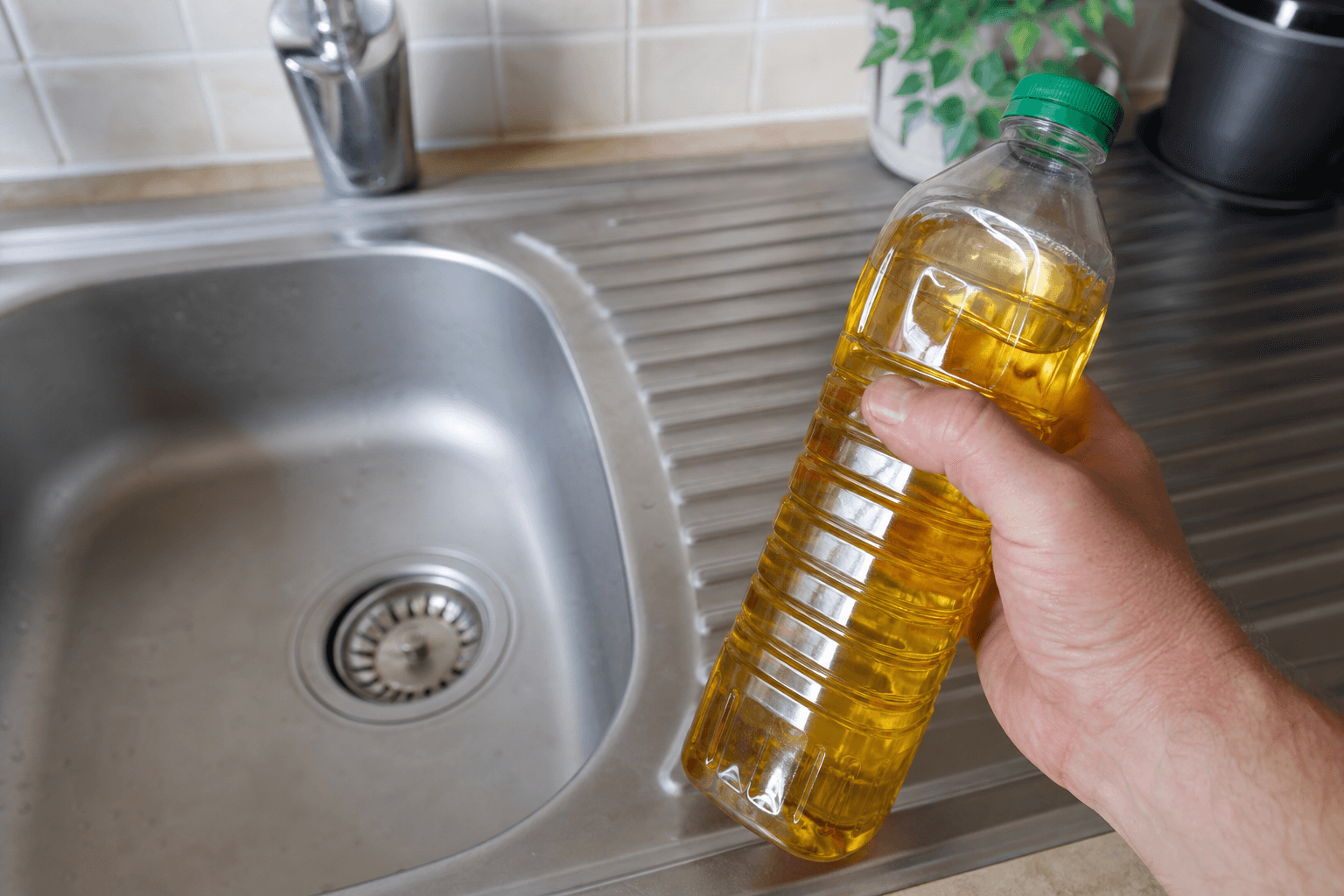
Every guide on how to dispose of cooking oil agrees on this: the sink is never the answer. Pour oil down the drain and you haven't got rid of it — you've moved the problem a few metres down the pipe, until the drain backs up and it's yours again.
Fats, oils and grease (the water companies call it FOG) are the reason Thames Water runs its "Bin it, don't block it" campaign. Thames Water clears up to 75,000 blockages a year across its patch. The oil in your pan feeds straight into that, and into the raw sewage that floods gardens and streets when a sewer gives up.
Then there's the fatberg — congealed fat welded to wet wipes and other rubbish until it sets like concrete. The most infamous turned up under Whitechapel: about 130 tonnes, the largest ever recorded, and weeks to hack out. Fatbergs like it surface across London year after year — and the fat that feeds them starts in kitchens like yours.
And beyond the ick factor, the pipes inside your own boundary are your responsibility — block those with congealed fat and the clearance bill lands on you or your landlord.
How to Dispose of Used Cooking Oil: Where SW London Residents Can Take It
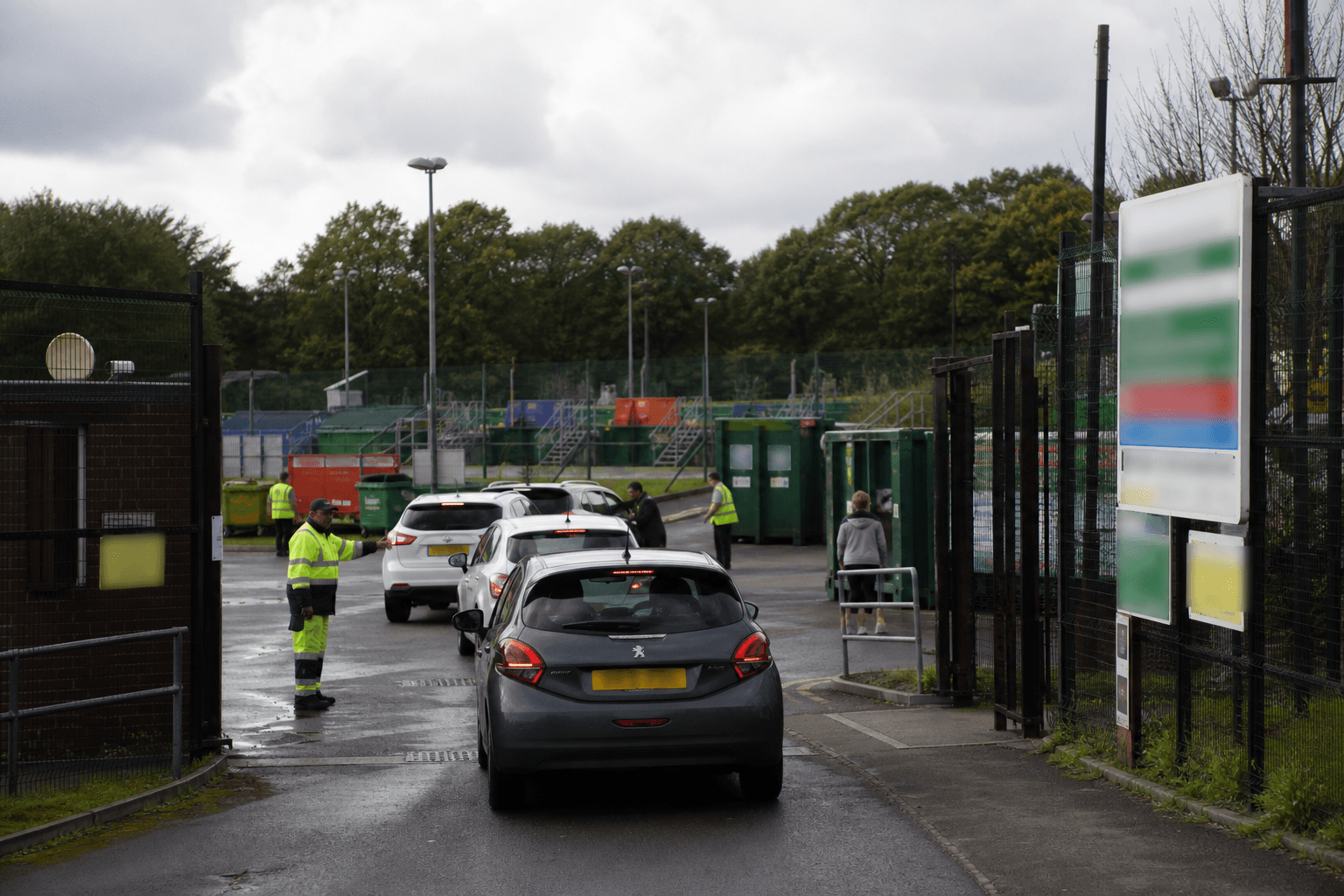
A pan of oil goes in the bin. But a deep-fat fryer, a catering drum, or the half-used bottles at the back of a cupboard need a proper drop-off. In South West London that means a Household Waste and Recycling Centre (HWRC) that accepts liquid oil — and not every site does.
Here are the closest options for SW London residents. Details change often and vary by council, so check the linked page before you travel — correct as of July 2026.
Smugglers Way HWRC (Wandsworth, SW18) — serves Wandsworth, Lambeth and WRWA residents. Accepts cooking oil and engine oil. Cars must pre-book a slot. Proof of name and address required. No vans at the HWRC.
Garth Road RRC (Merton, Morden SM4 4AX) — Merton residents only. Accepts cooking oil and engine oil. Booking required for cars and vans. Bring council tax statement or driving licence.
Vale Street RRC (West Norwood, SE27) — Lambeth residents. Temporarily unable to accept cooking oil or engine oil (July 2026) — council directs residents to Smugglers Way. Proof of address and photo ID; closed Tue/Wed.
If you're in Lambeth, Vale Street normally serves you — but as of July 2026 Lambeth Council's own page says it's temporarily unable to accept cooking oil or engine oil and sends residents to Smugglers Way instead. Check that council page first, though: it's the sort of thing that flips back without notice.
One thing about Smugglers Way catches people out: vans aren't allowed at the HWRC at all. Turning up in a van to clear a house or a business? You need the Smugglers Way or Cringle Dock waste transfer station instead, with pre-booking and photo ID. That's a common reason a DIY tip run turns into a wasted trip — and why a man-and-van collection is often simpler for volume.
Explore our Commercial Waste Solutions service
See what is included, typical timings, and what to prepare before you book.
Engine oil, car oil and motor oil are different — here's the rule
Used engine oil is not the same as cooking oil, and you can't treat it the same way. It's classified as hazardous waste under the List of Wastes and the Waste (England and Wales) Regulations 2011. It never goes in your bin, never down a drain, and never mixed with anything else — including cooking oil, paint or solvents.
The right route is an oil bank: a dedicated tank for used motor oil, found at many HWRCs. Both Smugglers Way and Garth Road above accept engine oil. To find your nearest, use the Oil Bank Line (oilbankline.org.uk, or call 03708 506 506) or check your council's HWRC page. There's no standalone GOV.UK "oil bank finder" tool any more — GOV.UK now points you to Recycle Now and your local council.
Car oil and motor oil — the same rules apply
"Car oil" and "motor oil" are just other names for used engine oil, and the treatment is identical: hazardous, oil bank only, never mixed. Changed your own oil at home? Keep it sealed until you reach an oil bank, and take the old filter too — most sites accept those alongside the oil. Never tip it into the same drum as your cooking oil; contaminating one with the other ruins both for recycling.
Restaurants, cafés and chip shops: fryer oil is commercial waste
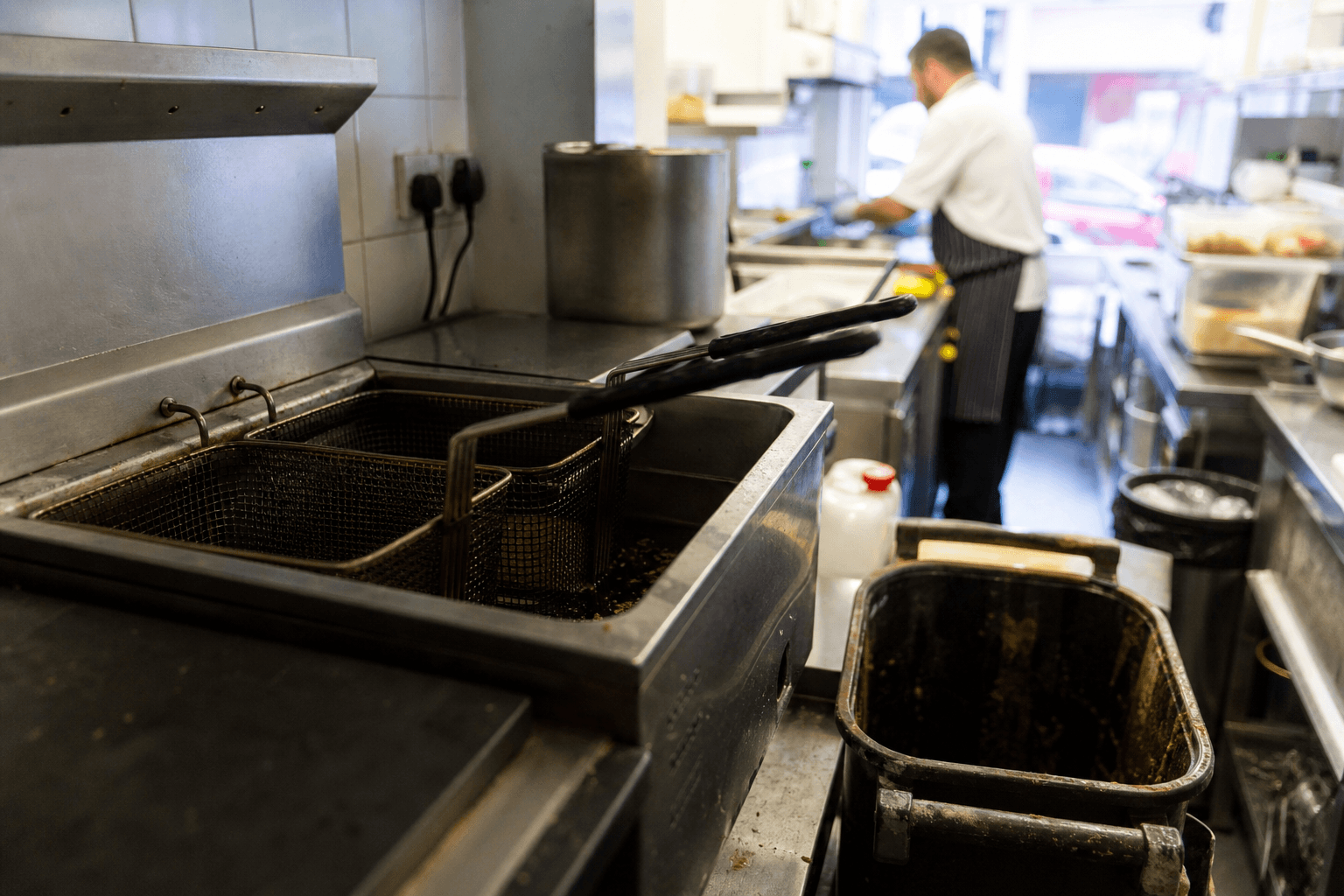
If you run a food business, none of the household advice above applies to you. Used cooking oil from a restaurant, café, takeaway or chip shop is commercial waste, with legal obligations a home cook never has to think about.
Under section 34 of the Environmental Protection Act 1990, you have a duty of care over your waste. In practice that means:
You must use an Environment Agency-registered waste carrier (their registration number starts "CBDU").
Every collection needs a Waste Transfer Note, signed by you and the carrier.
You must keep copies of those notes for at least two years.
Get it wrong — hand your fryer oil to an unlicensed carrier, or let it end up fly-tipped — and the penalties bite. Business-waste duty-of-care breaches can bring fixed penalties that can reach £600, and worse if a case goes to court. And liquid waste is banned from landfill outright under the Landfill (England and Wales) Regulations 2002, so loose fryer oil has to be handled and documented properly, not quietly tipped.
The upside: used cooking oil has value — it's a feedstock for biodiesel, so a good carrier collects it for recycling, not disposal. But the paperwork still has to be right. NV Waste is a licensed waste carrier handling commercial waste collection for restaurants and cafés across SW London. Same-day slots, transfer note included.
Fryer oil collection for SW London food businesses. Licensed carrier. Transfer note included. Same-day slots across Clapham, Battersea, Balham, Wandsworth, Tooting, Brixton and Streatham. Call 07900 455898 or WhatsApp us a photo for a fixed price.
Ready to book Recycling Services?
Send a quick enquiry — we typically respond the same working day.
Can you reuse cooking oil first?
Often, yes — and reusing it first means less to deal with later. Let the oil cool, then strain it through a fine sieve or a coffee filter to catch the crumbs that would otherwise burn and turn it rancid. Stored sealed and away from light, strained oil can usually take a few more fries.
Stop when it tells you to: if it smells off, foams, smokes lower than it used to, or has turned dark and syrupy, it's done — then seal the small amount for the bin, or take the big volume to a recycling centre.
Clearing out a kitchen full of it? (renovations, house clearances, closures)
Sometimes it isn't one bottle — it's a decade's worth. An old deep-fat fryer. A garage shelf of half-empty motor oil cans. A closed café that's left drums of fryer oil behind. That's when the tip run stops making sense: HWRCs won't take vans (see Smugglers Way above), so you're into multiple trips, booked slots and hauling heavy containers yourself.
A two-man team with all the loading included clears it in one visit — often cheaper than a skip, with none of the permit hassle. Weigh up the DIY route in our guide to tip runs in London, or see what a full house clearance costs if you're emptying a whole property. Local? Here's rubbish removal in Clapham, where we're based.
Frequently asked questions: How to Dispose of Cooking Oil in the UK: The Right Way for Every Amount (and Where London Takes It)
Short answers to common questions about this topic.
Our team will answer all your questions. we ensure a quick response.
Contact UsRelated posts
Most London tips ban hire vans — and DIY tip runs cost more than you think. Real 2026 numbers vs a man-and-van tip run. Same-day option for SW London.
What house clearance really costs in London — itemised 2026 prices by property size, what bumps the bill, and free routes. Get a fixed quote today.
Same-day rubbish removal in Clapham. Two-man team loads everything — no skip, no permit, no Lambeth 2-week wait. Licensed carrier. Call or WhatsApp now.
Latest in Waste Tips
View all in this category
Same-day Wandsworth rubbish removal. Two-man team clears the Tonsleys, Southside and Riverside Quarter. Licensed carrier. Call or WhatsApp now.

Two-man team carries your old sofa out today — no kerbside dragging, no council wait. Per-item London prices from £45. WhatsApp us for a quote.
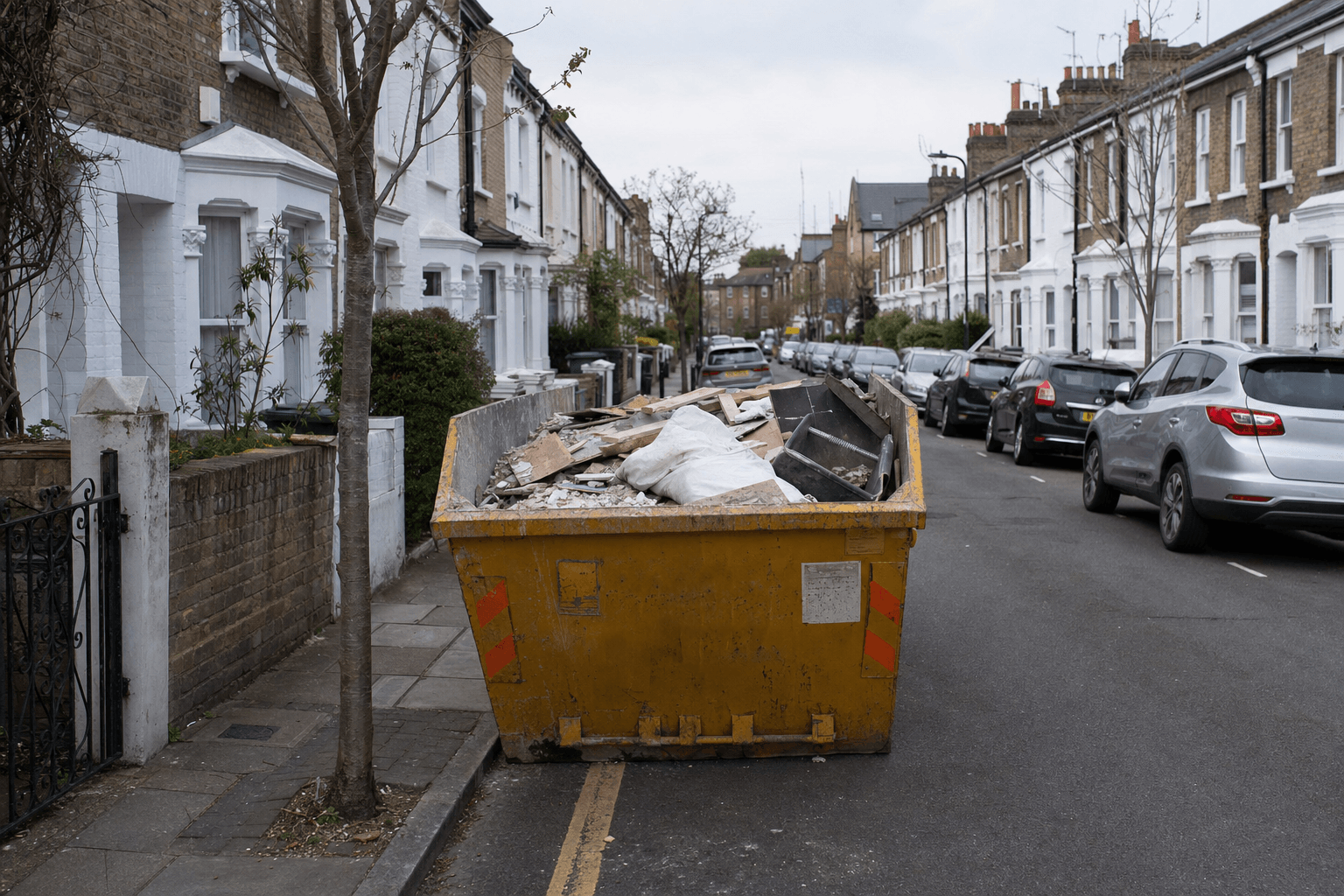
London skip hire runs ~£200–£450+ in 2026 — before the council permit. See the honest skip vs man-and-van comparison, then get a same-day quote.
Latest in Recycling
View all in this categoryMost London tips ban hire vans — and DIY tip runs cost more than you think. Real 2026 numbers vs a man-and-van tip run. Same-day option for SW London.
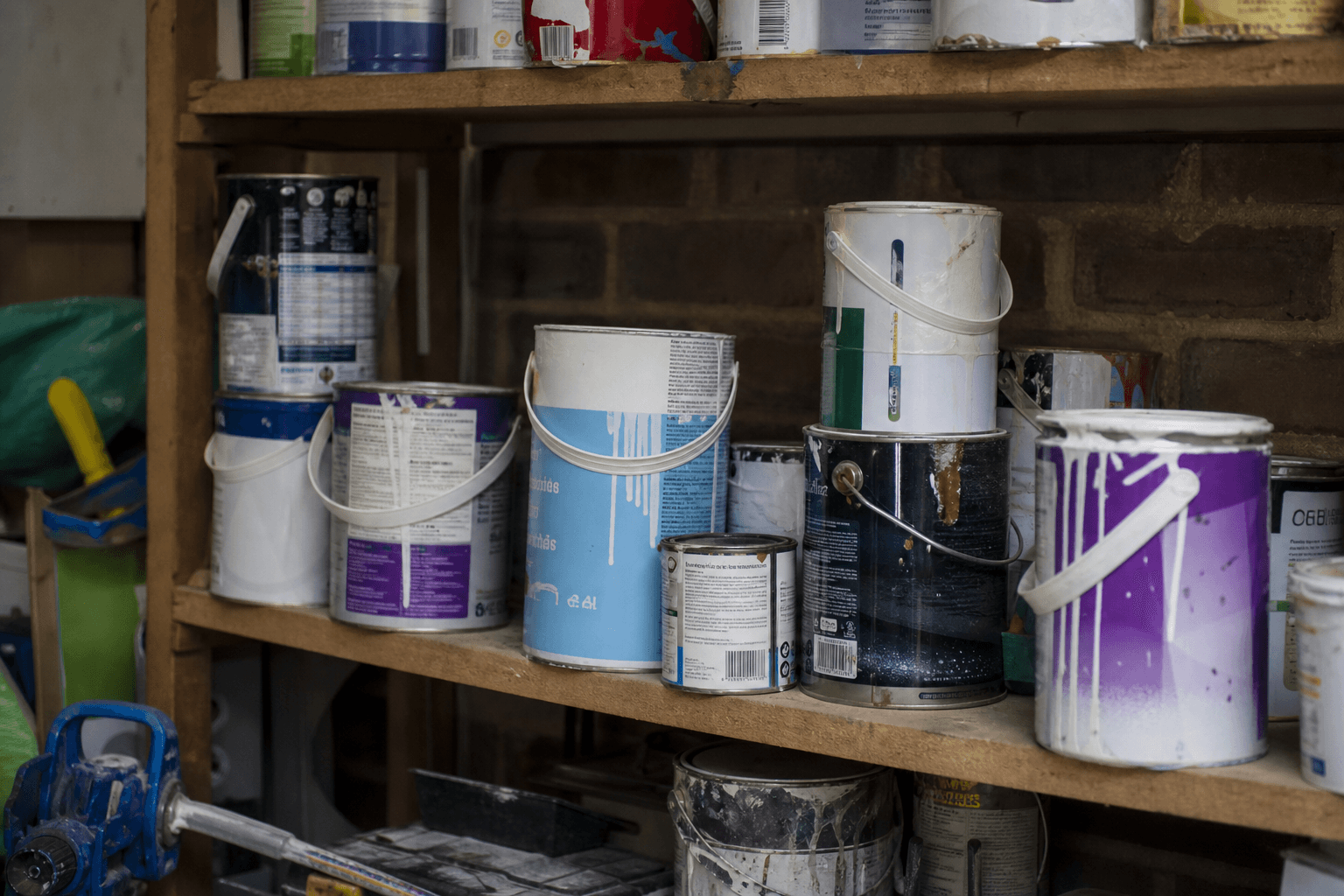
Liquid paint can't go in the bin. Here's the UK rule, the cat-litter hardening trick, where to donate in London — and when to call in a collection.
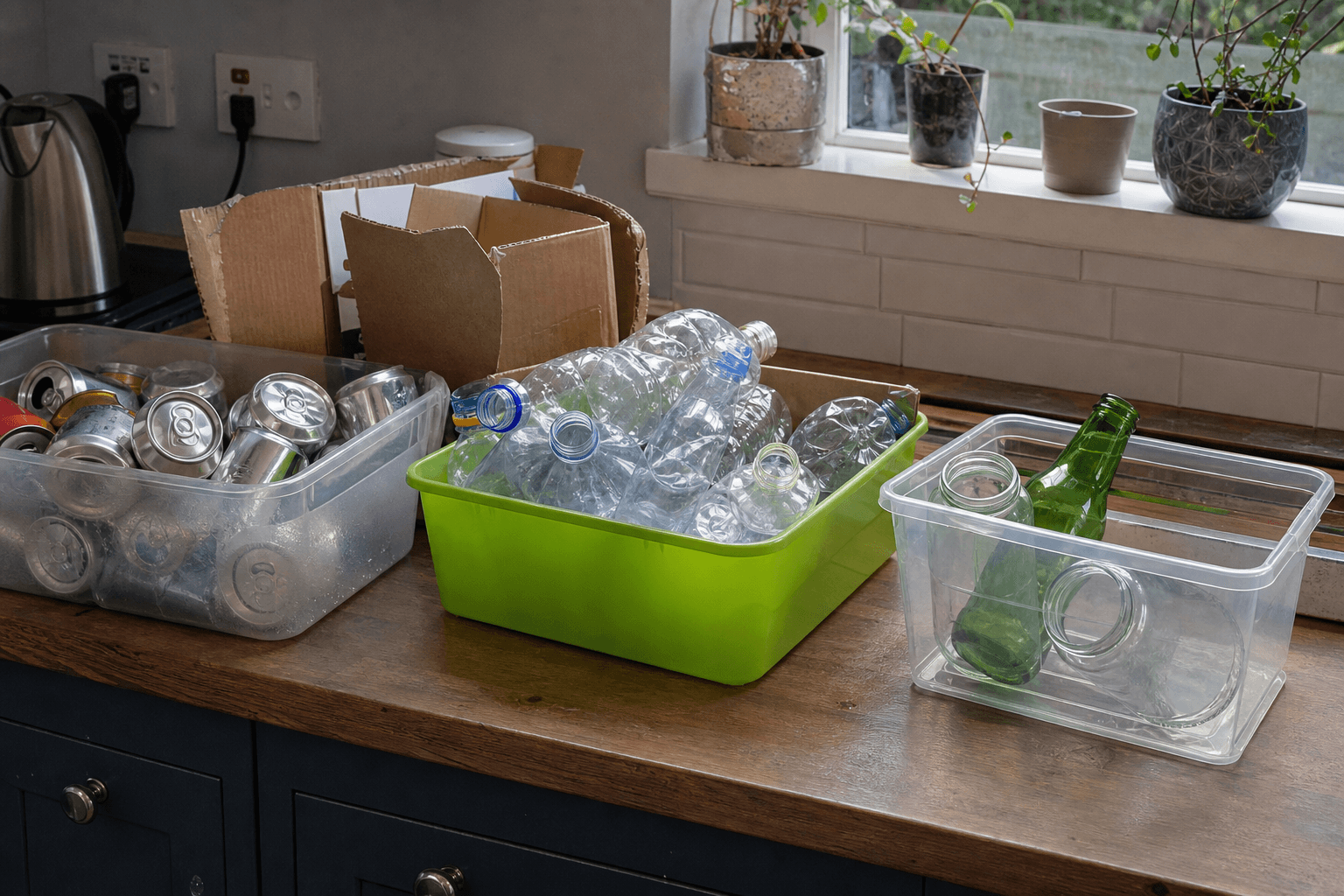
Many recyclable items still end up in general waste every day. Here are ten common items and how to handle them correctly.
Related services
Fast, licensed household rubbish removal for houses and flats in Clapham and nearby areas. Clear prices. Responsible recycling. Local team.
Flexible waste management for shops, offices, and small businesses. One-off pickups or regular collections across Clapham and nearby areas.
Responsible recycling and waste sorting for homes and businesses across Clapham. We help reduce landfill and support greener London.
Ready to Book Your Service?
Tell us what you need and our team will help you arrange collection quickly, with clear pricing and no hidden fees.